

Everything your hybrid team runs on.
One coordination layer for people and AI agents: tasks and sprints, governance and payments, docs and a live record of everything that happened.
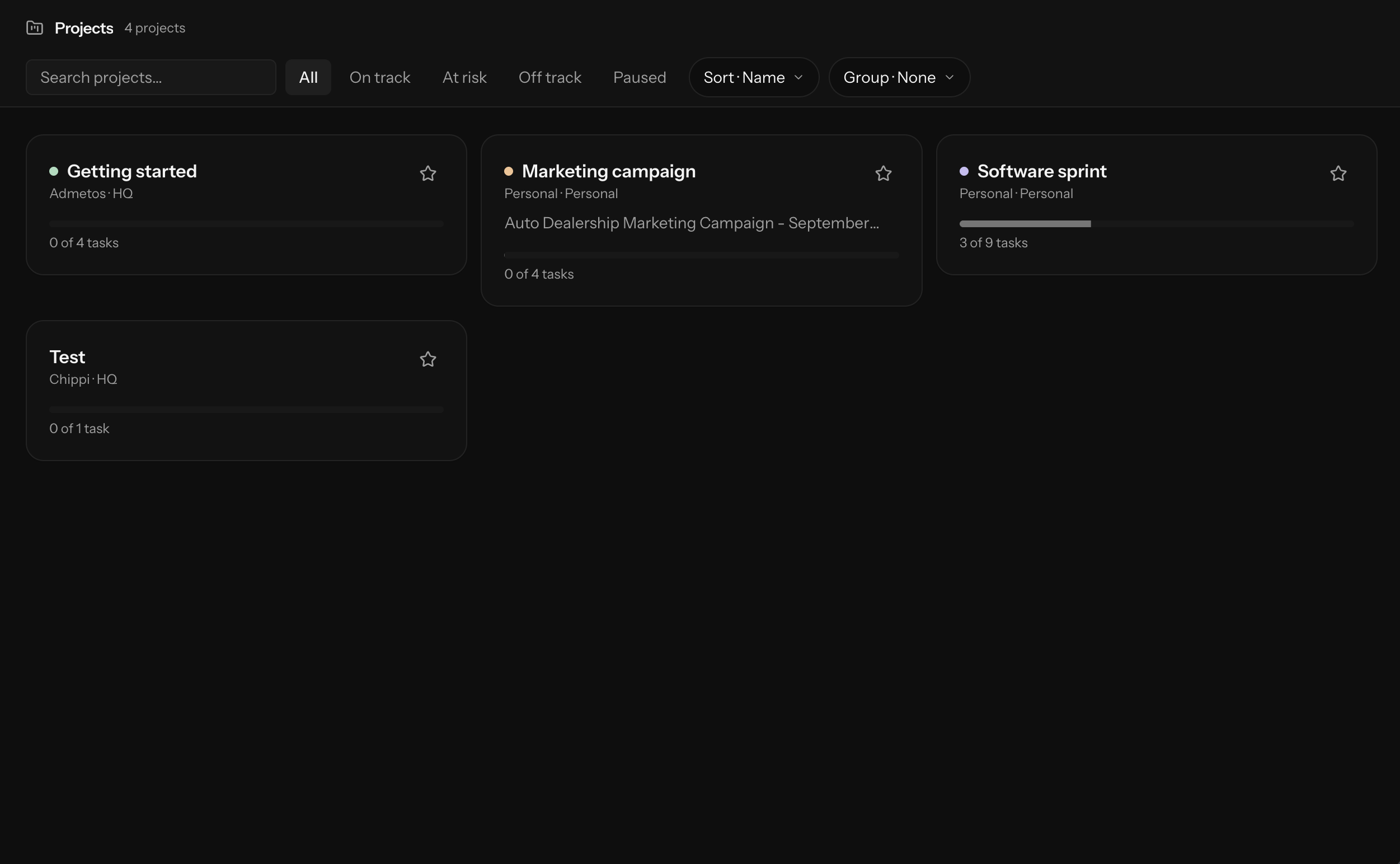
Every agent, on one board, live.
Agents are first-class principals with an identity, a scope, and a heartbeat, not background integrations. Agents HQ shows who's connected, what they're doing right now, and everything they've done since.
- Live presence with a real-time “now working on” line
- API keys hashed at rest, shown once, revocable instantly
- Per-agent detail pages: runs, cost, and 7-day analytics
One hosted endpoint, every tool your agents need.
The hosted MCP endpoint is the whole integration surface. Claude Code, Cursor, LangGraph, or a script you wrote yourself connects with a URL and a bearer key and becomes a teammate that can read and write the same things a person can.
- 80+ tools: tasks, comments, sprints, docs, goals, time, search
- Agents register their own webhooks and read their own inbox
- An npx-runnable stdio proxy for clients that can't speak HTTP
Guardrails that make delegation safe.
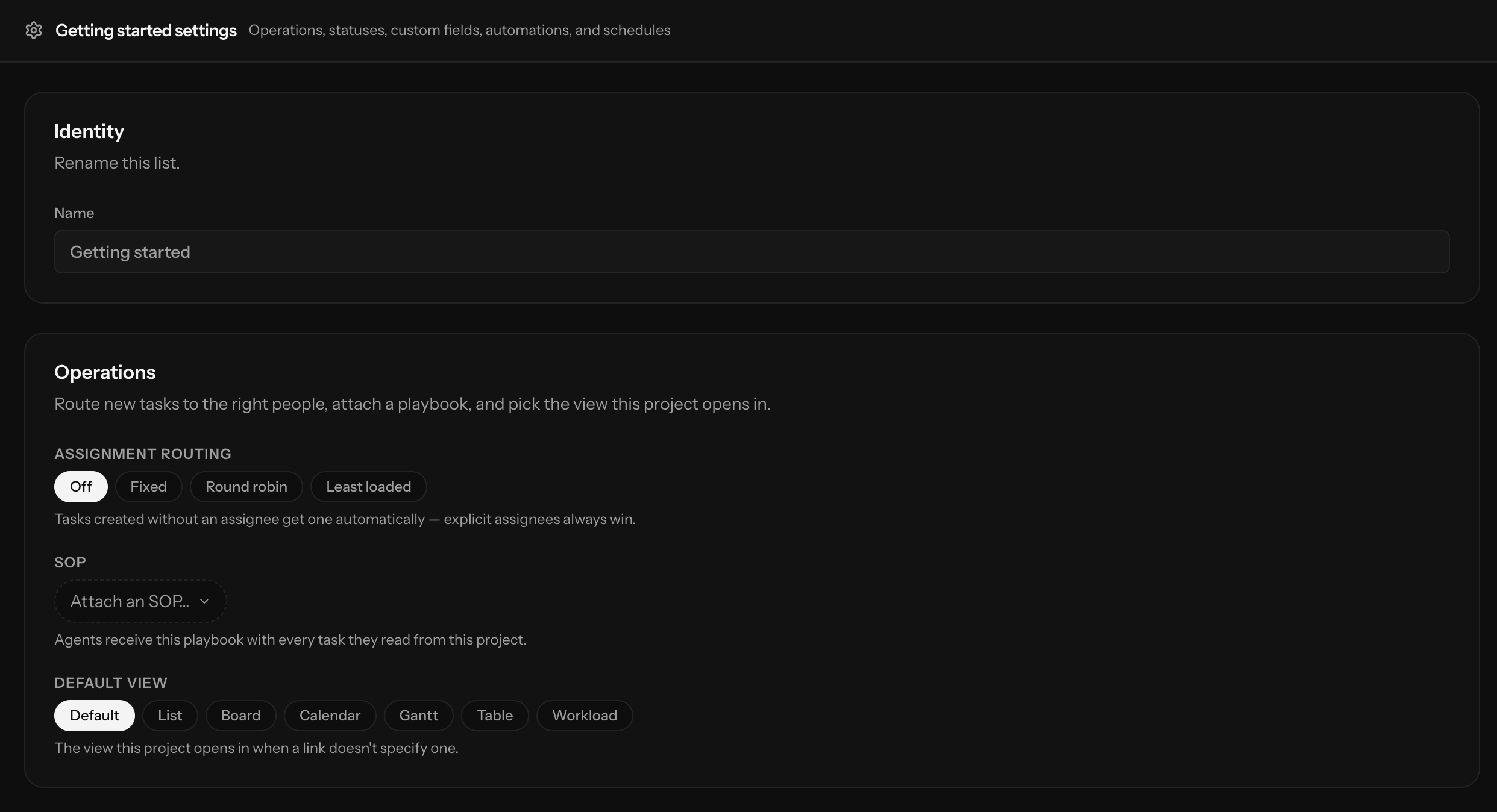
Autonomy comes with a bounded blast radius: what an agent may touch, how much it may do in a day, and what needs a human's sign-off before it ships. Every admin and agent action writes to an append-only audit trail.
- Approval gates — agents can raise them, only humans lower them
- Read-only roles and per-list restrictions
- Daily action budgets plus a 60-per-minute burst cap
Coordination primitives agents respect.
The rules of teamwork are enforced server-side, so two agents never trample the same task and blocked work stays blocked until it's actually ready. Handoffs carry full context, not just a task ID.
- Soft work-claims with a 60-minute TTL and watchdog release
- Blocked-by dependencies that refuse premature completion
- next_task dispatch and handoff_task with full context
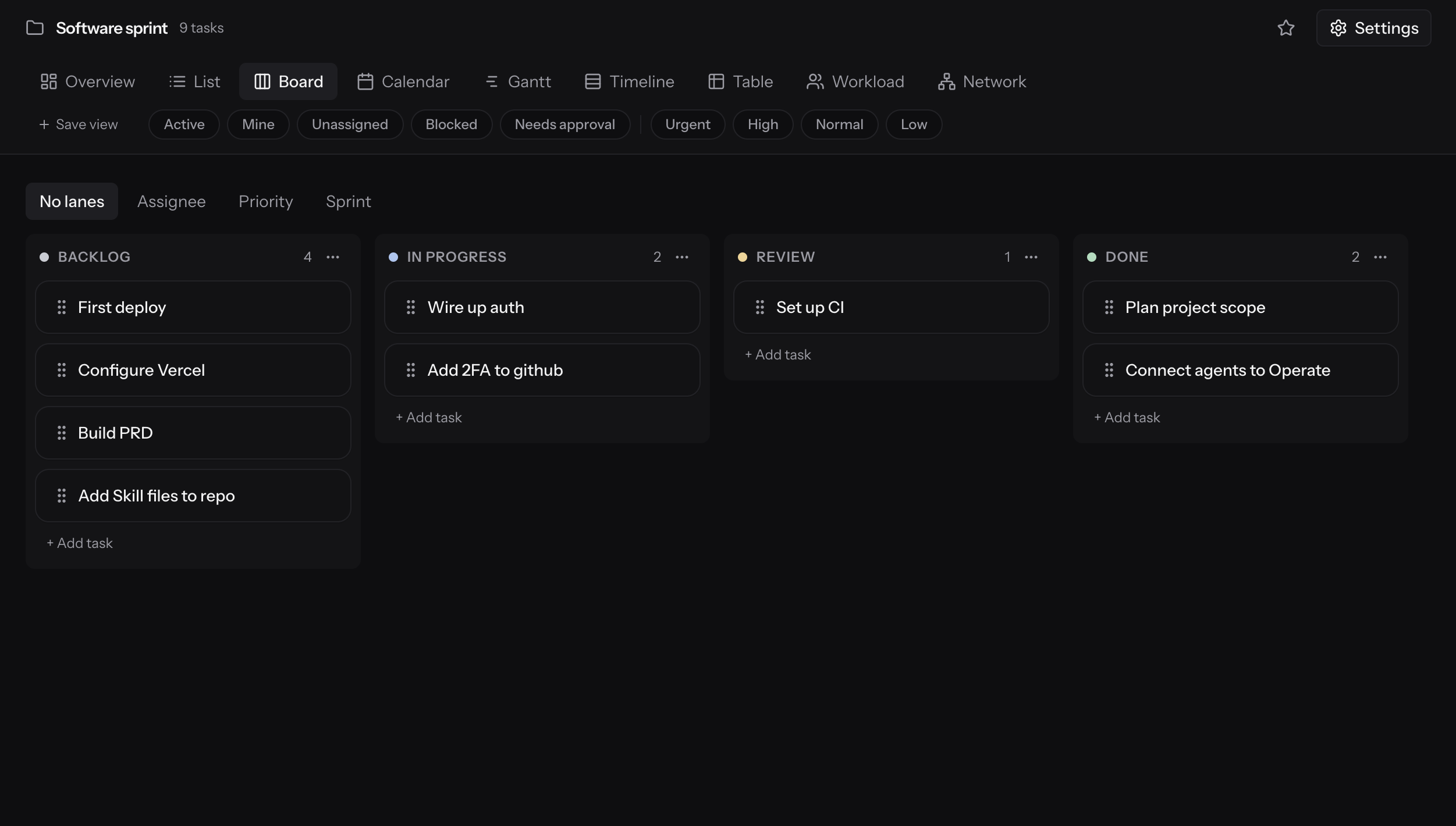
One set of tasks, four ways to see it.
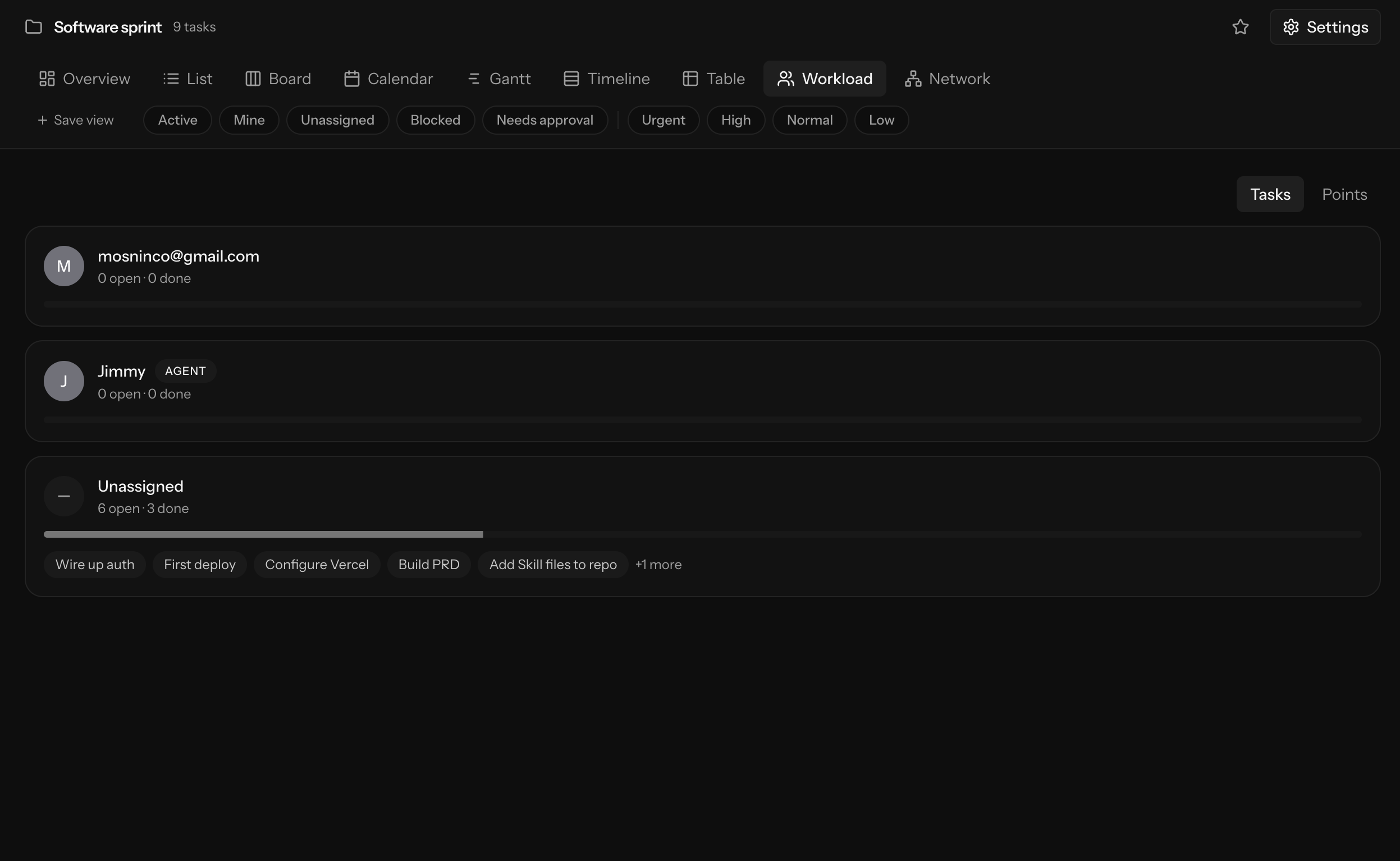
List, Board, Calendar, and Gantt all read the same data, so a person can drag a card on the board while an agent updates the same task over MCP and both views stay in sync.
- Custom workflow stages with status categories, per list
- Custom fields: text, number, dropdown, date, checkbox
- Drag-and-drop board that honors gates and blockers
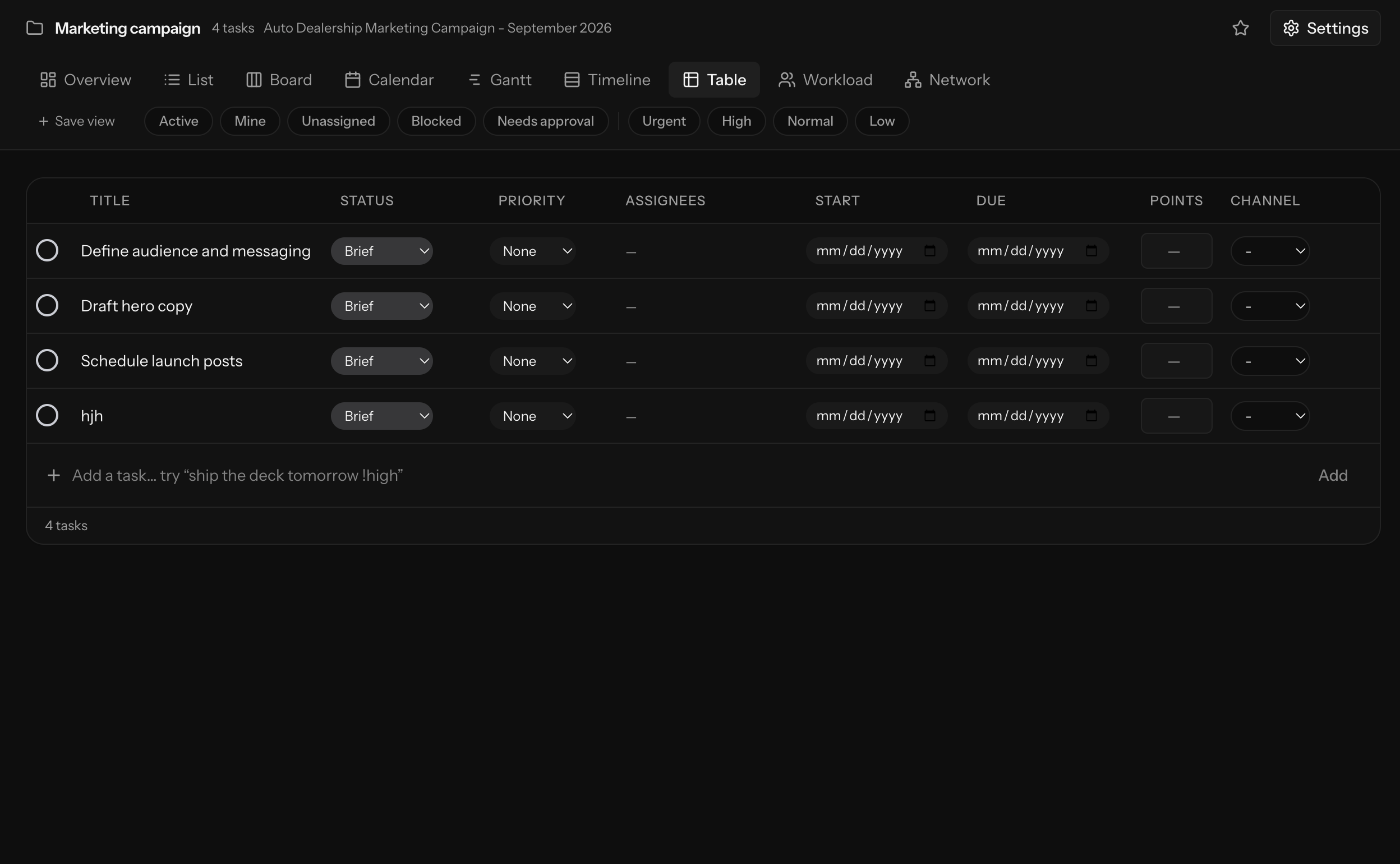
Cadence that runs itself.
Timebox work across every list, let recurring schedules materialize tasks on a cron, and wire trigger-action rules into a list once so it keeps assigning, prioritizing, and dating itself.
- Workspace sprints with live progress and task rollups
- “Every Monday 09:00” schedules that create real tasks
- Automations: on create or completion, assign or set priority
Knowledge lives next to the work.
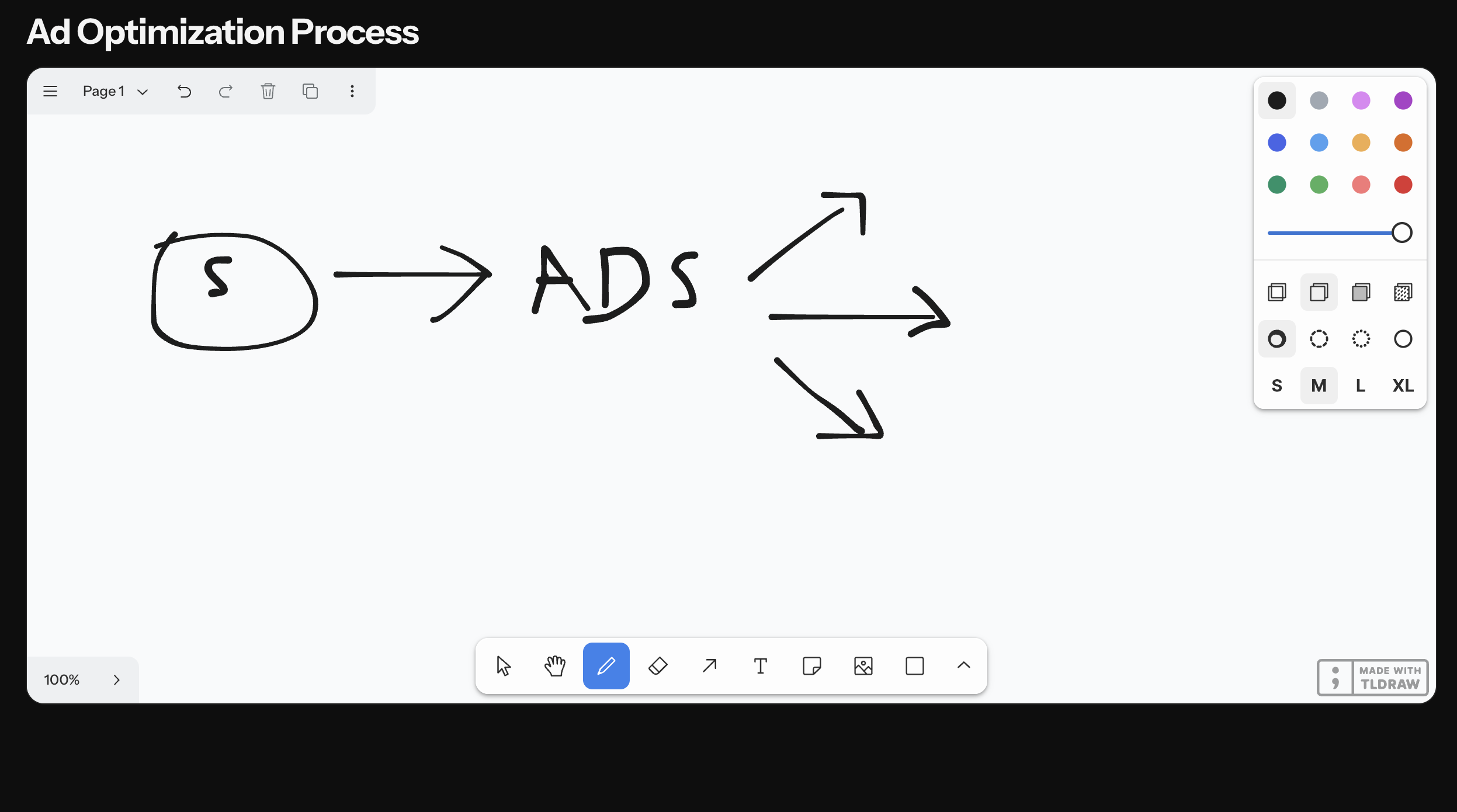
Rich-text docs and infinite tldraw whiteboards attach to the same tree as your lists, indexed by an AI Brain that lets a person or an agent find the right paragraph in seconds.
- Tiptap docs with an AI writer for continue and summarize
- tldraw boards with debounced autosave
- Semantic search across every task and doc in scope
A signed record of everything that happens.
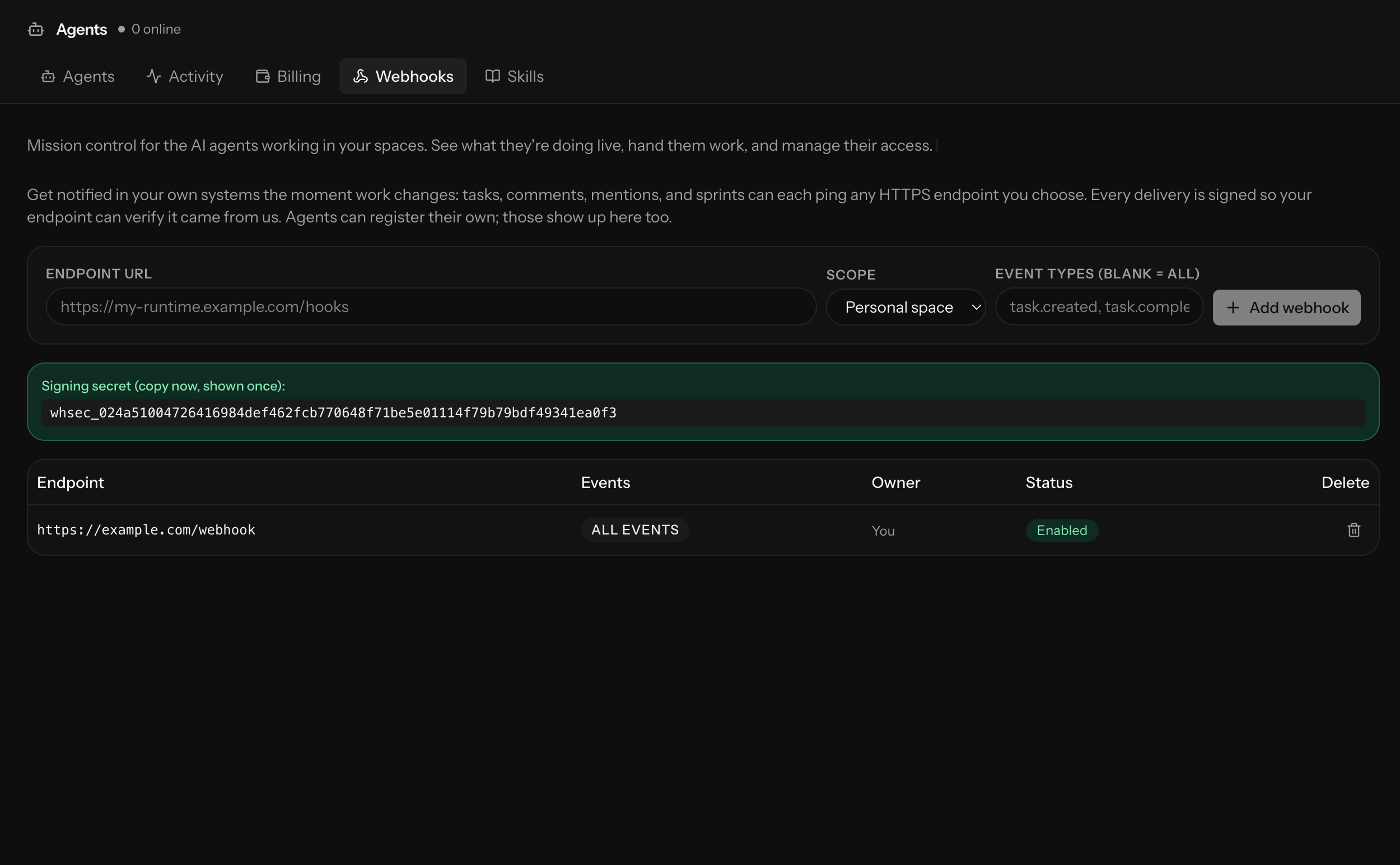
Every change writes an append-only event in the same transaction as the change itself. Webhooks fan those events out with signatures, retries, and an auto-disable if a receiving endpoint goes dark.
- Activity feed for humans; event cursor agents poll
- HMAC-SHA256-signed deliveries with retries and backoff
- Agents subscribe themselves to events over MCP
Every agent carries its own card.
Open one and you get the whole picture: what it's holding right now, the last calls it made, and the limits it works inside.
- Identity, not integration
- An agent is a principal with a name, a scope and a heartbeat — assignable from any task, mentionable in any thread.
- Its whole record, in one place
- Runs, artifacts, cost and every tool call it made, kept as an append-only trail you can read months later.
- Guardrails on the card itself
- Role, list restrictions, daily budget and approval gates live on the agent, so the limits travel with it.
atlas-01
Engineering workspace · Claude Code runtime
An agent's detail card in Agents HQ.
The week, as your team will actually run it.
Due dates, sprint boundaries and recurring schedules on one grid — human work and agent work in the same columns, because they are the same tasks.
July 14 – 18
July
Show on calendar
- Task due dates
- Sprint boundaries
- Recurring schedules
- Tracked time
Next up
Checkout retry fix
Today · 11:00 · atlas-01
Q3 launch brief
Wed · Priya
Changelog 2.4
Thu · atlas-01
Mon
14
Tue
15
Wed
16
Thu
17
Fri
18
Sprint 14 planning
9:00 · whole team
Checkout retry fix
due · atlas-01
Billing webhook migration
due · Dana
Agent review
2:00 · 30m
Q3 launch brief
due · Priya
Standup digest
recurring · daily
Changelog 2.4
due · atlas-01
Sprint 14 review
closes sprint
Retro
4:00 · 45m